
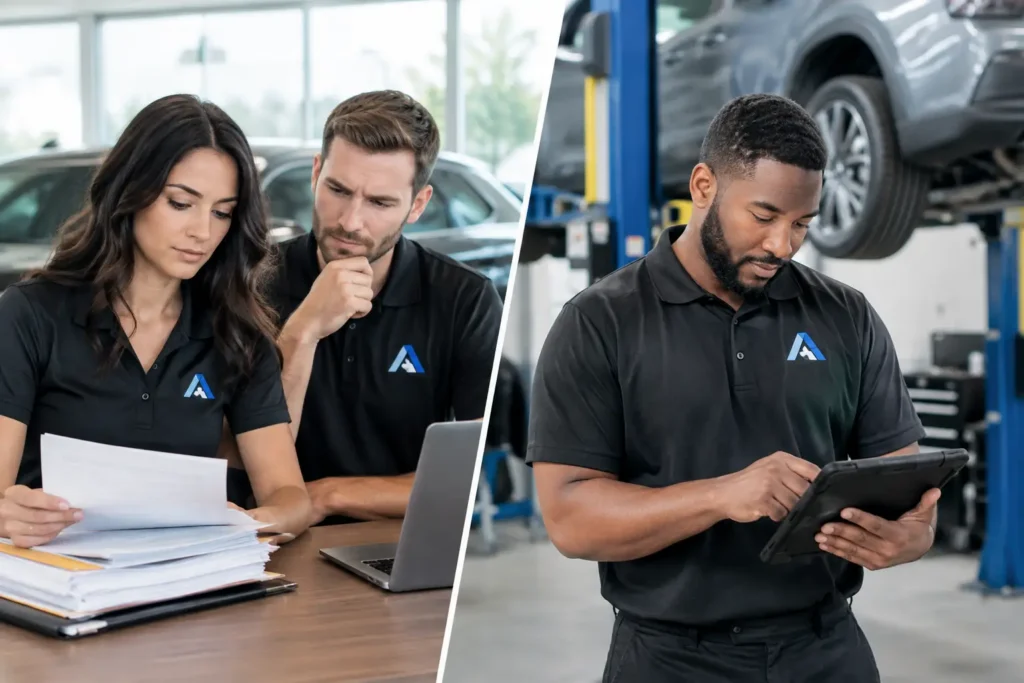
A used vehicle can look like it is moving when everyone is busy. The technician has inspected it, parts has ordered something, detail is waiting, and the Used Car Manager has asked twice for an update. But activity is not control. In the generic workflow vs dealership software decision, the real question is whether leadership can see the exact status of every unit, the next required action, and the person responsible before another day of holding cost is added.
A generic workflow platform can organize tasks. That is useful. But used-vehicle reconditioning is not a generic task list. It is a chain of dealership decisions involving appraisal, intake, mechanical work, parts, bodywork, detail, vendors, photography, merchandising, and front line approval. When that chain is managed in separate conversations and disconnected systems, delays become normal because nobody owns the full clock.
Generic Workflow vs Dealership Software: The Real Difference
Generic workflow tools are designed to work across many industries. A marketing department can create a project board, a construction company can assign tasks, and a dealership can build a basic reconditioning checklist. The flexibility is the appeal. The dealership also takes on the work of defining every stage, building every notification, training every user on workarounds, and maintaining the process when operations change.
Dealership software begins with the operating reality of a store. A vehicle enters through acquisition or trade intake. It needs an inspection, a decision on recon spend, repair authorization, parts coordination, outside-vendor scheduling, detail, photos, merchandising, and confirmation that it is front line ready. Each handoff affects gross, aging, turn, and customer demand.
That distinction matters because a generic tool often tracks whether a task was checked off. Dealership-focused get-ready software tracks whether a vehicle is advancing toward sale. Those are not the same measurement.
A task can be marked complete while the unit remains stalled. The inspection may be done, but the estimate has not been approved. Parts may have arrived, but the vehicle is sitting outside because the repair was never scheduled. Detail may be complete, but nobody has assigned photography. A management report that says 90 percent of tasks are completed does not help if the vehicle has been off the market for 12 days.
What a Dealer Principal Needs to See
Dealer leadership does not need another screen full of color-coded boxes. A Dealer Principal, GM, or Used Car Manager needs direct answers: Which units are aging in recon? Where are they sitting? How long has each one been there? What is blocking it? Who owns the next action?
A dealership-built platform should provide that answer without requiring a meeting, a call to service, or a search through text messages. It should show timestamped movement from intake through each department and expose exceptions quickly. If a vehicle sits in mechanical for three days waiting for an estimate, the delay should be visible. If an outside vendor has not confirmed pickup, that should be visible too.
That which is measured improves. That which is hidden gets explained away.
Generic workflow systems can be configured to display some of this information, but configuration is not the same as operational fit. Most stores do not have extra time to become software architects. They need a process that reflects how vehicles actually travel through their departments, while still allowing the GM to set standards and hold the team to them.
Where Generic Tools Usually Break Down
The issue is not that generic software is bad. For simple, repeatable internal projects, it may be enough. A small independent dealer with a handful of cars, one technician, and no outside vendors may be able to run a basic board effectively. If one person controls every handoff, the operational risk is lower.
The gaps appear as volume, departments, and accountability requirements increase. Four problems show up repeatedly:
- Vehicle context gets lost. A task title such as “order part” does not tell management which vehicle is affected, how long it has been down, or whether a decision is needed before spending more recon dollars.
- Handoffs depend on manual follow-up. A completed task may not automatically alert the next department, leaving vehicles waiting until someone notices them.
- Reporting measures work, not speed to sale. Management needs cycle time by stage, overdue units, bottleneck trends, and accountability by owner, not just a count of closed tasks.
- Vendors remain outside the process. Body shops, glass companies, wheel repair, transport, and photography vendors are often managed by calls and texts, which means the update trail disappears when the person coordinating is unavailable.
These failures are expensive because every stalled unit has a daily cost. Floorplan expense, depreciation, recon investment, market movement, and missed retail opportunities do not pause because a ticket is waiting for a comment.
The Workflow Must Match the Store, Not the Other Way Around
A dealership should not have to abandon its established get-ready process to use software. The better approach is to document the current path a vehicle takes, identify the points where it stalls, and configure stages, assignments, alerts, and reporting around the store’s operating model.
That does not mean preserving every bad habit. If the current process relies on a whiteboard that only one person can interpret, it needs to change. If repair approvals sit in a manager’s inbox for two days, the workflow needs escalation. If detail does not know a vehicle is cleared until sales walks through the department, the handoff needs to be automated and documented.
The goal is not more process for its own sake. It is a clear process with fewer blind spots. Employees should know what is expected when a vehicle reaches them. Managers should know immediately when a standard is missed. Leadership should be able to distinguish a legitimate delay, such as a backordered part, from an unowned delay that has simply become accepted.
Why Timestamps Change Behavior
Verbal updates are easy to give and hard to verify. “It was just moved.” “The vendor is coming tomorrow.” “Parts should be here.” Sometimes those statements are accurate. Sometimes they are estimates that have been repeated for days.
Timestamped activity changes the conversation. It documents when a vehicle entered a stage, when work was assigned, when an update was made, and when it was released to the next step. That protects good employees who are waiting on another department, and it identifies the real source of delay without guesswork.
This is especially valuable when sales and service have competing priorities. Service may be managing customer-pay work, warranty work, and recon at the same time. The used-car department may be pushing for faster turn. A shared dashboard replaces the argument with facts: here is the vehicle, here is the stage, here is the time in stage, and here is the next owner.
The Business Case Is Faster Front Line Readiness
The purchase price of workflow software is rarely the deciding cost. The larger cost is the number of vehicles a store fails to retail promptly because get-ready is inconsistent. One or two unnecessary days across a meaningful used-vehicle inventory can affect turn, cash flow, and gross far more than a monthly software subscription.
A dealership-specific system earns its place when it reduces the management effort required to keep units moving. It should eliminate the daily hunt for status, reduce duplicate calls and texts, make vendor commitments visible, and give managers exception reporting instead of another manual report to build.
AutoGetReady is built around this operating need: a single, real-time view of every vehicle from intake through front line readiness, with configurable stages, documented ownership, alerts, and reporting that exposes bottlenecks. The point is not to force a dealership into a canned process. It is to make the existing process measurable, then improve it.
Before choosing any platform, map ten recently completed used vehicles from acquisition to the front line. Ask where each one waited, who knew it was waiting, and whether the delay was documented at the time. That exercise will show whether a generic tool is truly enough or whether the store needs software built to make every day, handoff, and owner visible.