
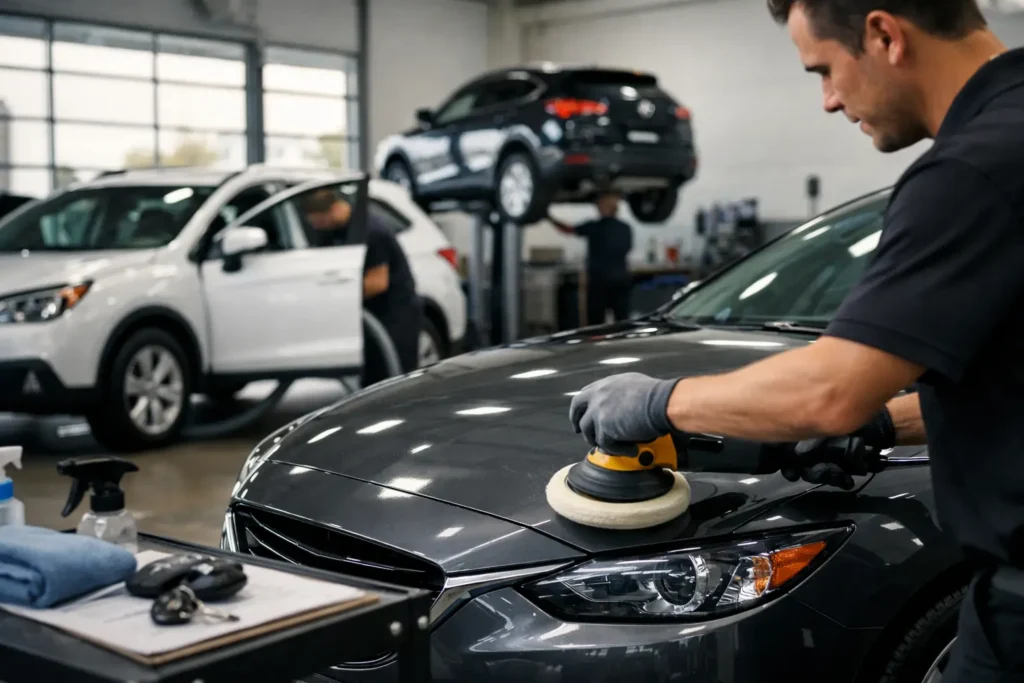
A used vehicle can be mechanically complete on Tuesday and still miss the front line until the following week. Nobody intends for that to happen. The delay usually comes from a part that was never ordered, a detail ticket sitting unnoticed, photos waiting on a porter, or a vendor who was never given a firm due date. A dealership vehicle get ready process exists to prevent those handoff failures and move every acquired unit toward sale with documented ownership.
For a Dealer Principal or GM, the issue is not whether people are busy. The issue is whether work is moving. Every day a vehicle remains in reconditioning adds holding cost, ties up capital, and reduces the number of days available to retail it. If management cannot see what is holding a unit, the store is managing by hallway conversation instead of facts.
Start With One Clear Definition of Front Line Ready
A vehicle is not front line ready because someone says it is. It is ready when the store’s required work is complete, the vehicle is physically available, its pricing and merchandising are in place, and the sales team can confidently show it.
That definition should be specific enough that there is no debate between used cars, service, detail, and sales. For most stores, it includes a completed inspection, approved mechanical work, parts installation, cosmetic repairs, detail, required vendor services, photography, online merchandising, and a final quality check. F&I or title status may also need to be visible, even when those items do not stop a vehicle from being displayed.
The exact standard depends on the dealership. A high-volume independent store may choose to photograph a vehicle while minor cosmetic work is still scheduled. A luxury franchise may require every cosmetic correction before the unit is photographed. Neither approach is automatically wrong. What matters is that the rule is documented, understood, and measured consistently.
Build the Dealership Vehicle Get-Ready Process Around Handoffs
Most reconditioning delays are not caused by the actual repair. They occur in the space between tasks. The technician finishes an inspection, but the estimate is not approved. Parts identifies a backorder, but the Used Car Manager is not alerted. Detail completes the car, but photography does not know it is available.
A working get-ready process assigns an owner at every stage. Not a department in general. A person. When a unit moves from intake to inspection, the next responsible employee should know it immediately. When a task is complete, the following task should be triggered without waiting for a phone call, a sticky note, or someone to notice a whiteboard update.
At intake, capture the facts that affect speed and profitability: stock number or VIN, acquisition source, date acquired, location, condition notes, target retail date, and initial owner. That information should stay with the vehicle through every stage. Re-entering it into separate spreadsheets and forms wastes time and creates conflicting versions of the truth.
Inspection Must Create a Decision, Not Just a Report
The inspection is where a vehicle either gains momentum or begins to age. A completed multipoint inspection has little operational value if nobody has defined who approves the repair plan, how quickly approval is required, or what happens when the estimate exceeds the expected recon budget.
Set an approval standard that fits the store. Some managers can approve routine repair work immediately within an established threshold. Larger expenses may require Used Car Manager or GM review. The trade-off is clear: more controls can protect gross, but too many approval layers slow the car down. Management should know exactly which units are waiting on a decision and for how long.
The same discipline applies to parts. A status of “waiting on parts” is not enough. The record should identify the part, expected arrival date, whether an alternate source is available, and who owns the follow-up. Without that detail, a vehicle can disappear into a vague status for days.
Separate Parallel Work From Sequential Work
Not every task needs to wait for the previous one. This is one of the fastest ways to reduce cycle time without pressuring employees to cut corners.
For example, bodywork and parts ordering can often begin as soon as the inspection is approved. A vehicle can be scheduled for photography before detail is complete, provided the photographer receives a real completion alert rather than a guess. Pricing research, title review, and merchandising preparation may also happen while service work is underway.
Some work is necessarily sequential. Final photos should not be taken before the exterior is ready. A final quality check should not occur before all approved repairs are complete. The process should distinguish between true dependencies and habits that developed because departments have always worked separately.
Use Timestamps to Expose the Real Bottleneck
That which is measured improves. In get-ready, timestamps are not about policing people. They show management where the process is losing time.
A dashboard should show when the vehicle entered intake, when inspection began and ended, when repair approval was requested, when parts were ordered, when detail was assigned, and when the car became front line ready. With that history, a GM can tell the difference between a legitimate three-day parts delay and a vehicle that sat for three days before anyone ordered the part.
Review aging by stage, not just total days in recon. A seven-day cycle time can hide a serious problem if five of those days occur before inspection. Likewise, a store may find that its technicians are completing work quickly while completed vehicles wait too long for vendor glass repair, photos, or online merchandising.
The goal is not to demand identical cycle times on every unit. A clean, late-model trade and a high-mileage auction vehicle should not be judged by the same standard. The goal is to identify exceptions early, assign a next action, and prevent avoidable idle time.
Make Vendor Work Visible to the Store
Outside vendors are often essential to the used-car operation, but they cannot be managed through memory. Windshield repair, paintless dent repair, wheels, keys, bodywork, transport, and photography each create opportunities for vehicles to stall.
Every vendor task needs a request date, due date, current status, and accountable internal owner. The vendor should receive clear work details, but dealership management still owns the outcome. If a vendor misses a due date, the vehicle should be visible as overdue before it becomes a surprise at the next used-car meeting.
There is a practical balance here. Vendors do not need access to every internal dealership detail. They do need timely, accurate instructions and a simple way to confirm completion. The store should retain one source of truth for the vehicle’s status regardless of how many outside providers touch it.
Run a Daily Exception Review, Not a Status Meeting
A long recon meeting where every department gives a general update is rarely the best use of leadership time. Review exceptions instead: units over the target age, tasks without an owner, approvals waiting beyond the standard, overdue vendor work, parts delays, and cars that are mechanically done but not merchandised.
This changes the conversation from “Where is that car?” to “What decision or action gets this car moving today?” It also keeps department managers focused on commitments that can be verified the next morning.
AutoGetReady gives dealerships a shared, real-time view of those stages, assignments, timestamps, and overdue tasks without forcing the store to abandon the workflow it already uses. The value is not another screen to watch. It is the ability to see the stalled handoff, assign an owner, and hold the process accountable before the unit ages.
Protect Quality While Improving Speed
Fast does not mean rushed. Cutting a required safety repair, skipping a final walkaround, or photographing a dirty vehicle creates problems that cost more than a day in recon. The better approach is to remove waiting, duplicate communication, and unclear ownership while keeping quality gates intact.
Track the outcomes that matter: average days from acquisition to front line, days in each stage, percentage of units meeting the target, overdue task count, recon spend versus plan, and aged units with no next action. Then look at the exceptions by source, vehicle type, department, and vendor. Patterns will appear quickly when the data is clean.
A disciplined get-ready process gives every vehicle a next step, every task an owner, and every delay a visible reason. Start by pulling the units that have been sitting the longest. For each one, ask one operational question: what exactly must happen next, and who is committed to doing it today?